


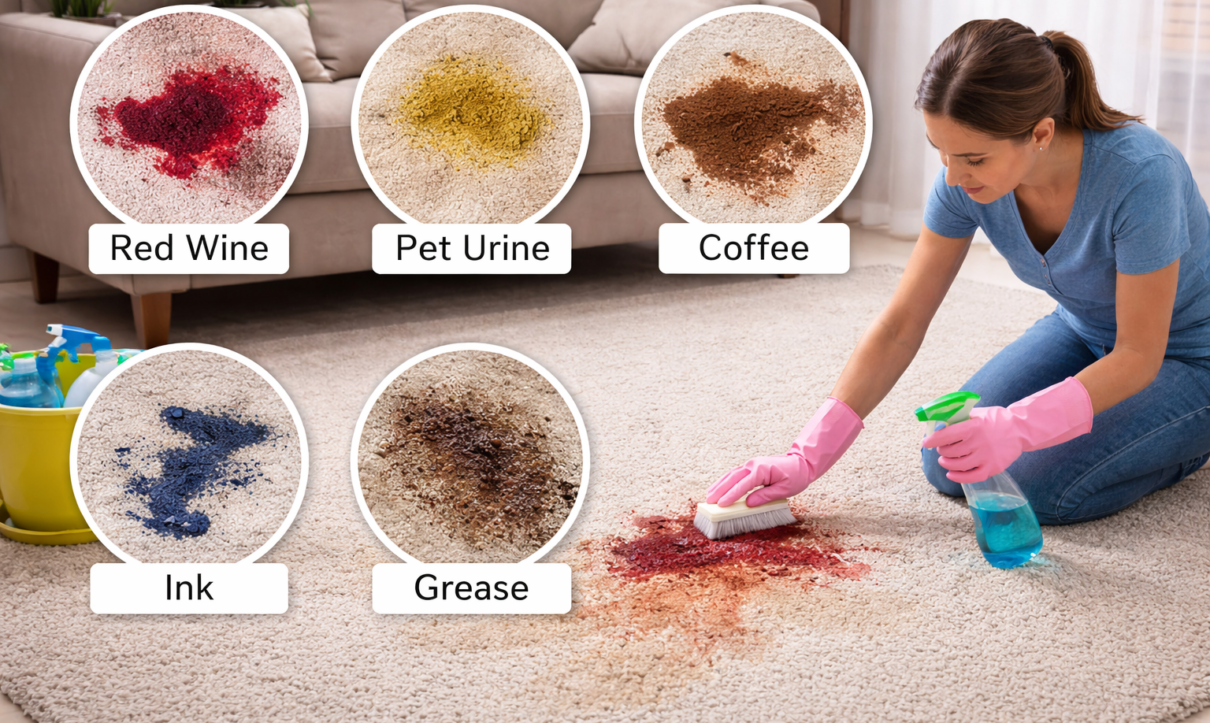
Top Carpet Stains That Fail Rental Inspections (And How to Remove Them) – During the process when tenants move out of a rental property, one of the first things landlords or property managers check is the carpet. This article, Top Carpet Stains That Fail Rental Inspections (And How to Remove Them), explains why stained carpets can lead landlords to deduct money from your deposit or charge additional cleaning fees. Bright spots or marks become more noticeable under inspection lighting, and this is why the smallest mark can look like a big problem, especially in high-traffic areas such as hallways or living rooms.
Carpet stains occur when fluids, dyes, oils, or biological substances penetrate deep into carpet fibers. Stains, if not treated properly or on time, can become permanent. In most rental contracts, large or poorly maintained stains are regarded as damages that are beyond normal wear and tear, which means tenants may have to pay for repair or replacement.
So here are the most common carpet stains that often cause rental inspections to fail and the right ways to remove them before the end of a lease.
1. Coffee and Tea Stains
Coffee and tea have tannins, the elements responsible for leaving those ugly brown or yellowish stains on your carpet. Here is a solution to get rid of them:
- Using a clean, dry towel to absorb the spilled liquid.
- Take one tablespoon of dish detergent, one tablespoon of white vinegar, and two cups of warm water, and mix them.
- Apply the solution gently, then blot the stain.
- Rinse with cold water and allow the area to dry.
Immediate blotting is the key to stopping the stain from penetrating the fibers.
2. Red Wine Stains
Red wine stains are very prominent, and at the same time, they are one of the most common things landlords blame on tenants during the rental inspection. Here is how to clean the stains:
- Immediately blot the stain using paper towels.
- Add a bit of cold water to the stain.
- Sprinkle baking soda or salt over the stained area.
- Vacuum the area after 20-30 minutes and do it again if necessary.
This treatment helps lift the wine pigment before it gets locked inside the carpet fibers.
3. Pet Urine and Odor Stains
Pet stains are a major issue during rental inspections as they not only leave marks but also produce bad smells. How to get rid of them:
- Blot the spot with paper towels to soak up the liquid.
- Apply an enzyme-based cleaner designed for pet stains.
- Allow it to stand for the recommended time, blot, and dry.
Such cleaners are very effective as they destroy the source of both the stain and odor.
4. Grease or Oil Stains
Grease stains can originate from cooking oils, cosmetics, or lotions. They leave the surface looking dark, and water alone is not enough to get rid of them. How to get rid of them:
- Cover the stain with baking soda or cornstarch.
- Allow it to sit for 15-30 minutes to absorb the oil.
- Vacuum the powder.
- Then clean the residue with dish soap and warm water.
Absorbent powders are great at drawing the oil out of the carpet fibers before you use the cleaning agents.
5. Ink or Dye Stains
Ink from pens and markers can penetrate the carpet fibers rapidly and can cause discoloration that is very difficult to remove if the stain is left untreated. How to get rid of them:
- Use a cotton ball to apply a small amount of rubbing alcohol onto the ink stain.
- Gently blot the stain from the outer edge toward the center.
- Keep doing it until the ink has transferred to the cotton ball.
Alcohol helps break down many types of ink pigments, which allows them to be lifted off the carpet.
Important Tip: Always blot stains instead of scrubbing them. Scrubbing will force the stain into carpet fibers and also damage those fibers, so the stain will become even harder to remove.
Extra Tips to Pass a Rental Inspection
Here are some tips to help you ensure your carpet passes the landlord’s inspection:
- Act quickly: A stain will get harder to remove the longer it is left alone.
- Spot test cleaning products: Use them on an inconspicuous spot first, so you will not get discoloration.
- Vacuum well: Removing dust and dirt improves the overall appearance of the carpet.
- Make sure the carpet gets totally dry: Wet carpet might cause rings or a bad smell.
Inspectors may be able to see stains even if they are very faint, especially if the room is brightly lit. Sometimes, a professional carpet cleaning must be done before a move-out inspection.
Conclusion
It is quite helpful to know the ways to treat common stains, such as wine, grease, pet urine, and ink stains, if you want to protect your deposit and return the property in the best condition. For reliable end-of-lease cleaning services, Quality Bond Cleaning offers a team of experts who offer professional house cleaning, designed to satisfy the stringent rental inspection standards and assist tenants in getting their full bond refund.
FAQs
Are carpet stains normal wear and tear?
Sometimes, small and light stains may fall under normal wear and tear. However, large permanent stains are generally regarded as tenant damage.
Do old carpet stains fade away completely?
Yes, many old stains can be lightened or even removed by applying vinegar solutions, baking soda, or commercial carpet cleaners; however, certain dye stains may be permanent.
Is it okay to scrub carpet stains?
No. Besides getting the fibers damaged, scrubbing may also push the stain even deeper into the carpet. Blotting is the way to go.
Which household products can get rid of carpet stains?
The usual solutions are white vinegar, baking soda, dish soap, and hydrogen peroxide, depending on the type of stain.
When is it time to call in professional carpet cleaners?
If, after all your DIY attempts, some stains are still there, or if the stained area is quite large, then professional cleaning may well be the best option, given that this way you can be sure you will not lose your rental deposit.